
Most outdoor cushions don't fail from one dramatic event. They fail from the same three things, day after day, until the fabric can't keep up.
Quick answer: Sun, salt, and pool chemicals each attack fabric differently, but solution-dyed Sunbrella fabric resists all three for the same underlying reason — the colour runs all the way through the acrylic fibre rather than sitting on the surface, so there's no thin dyed layer for UV, salt, or chlorine to wear through.
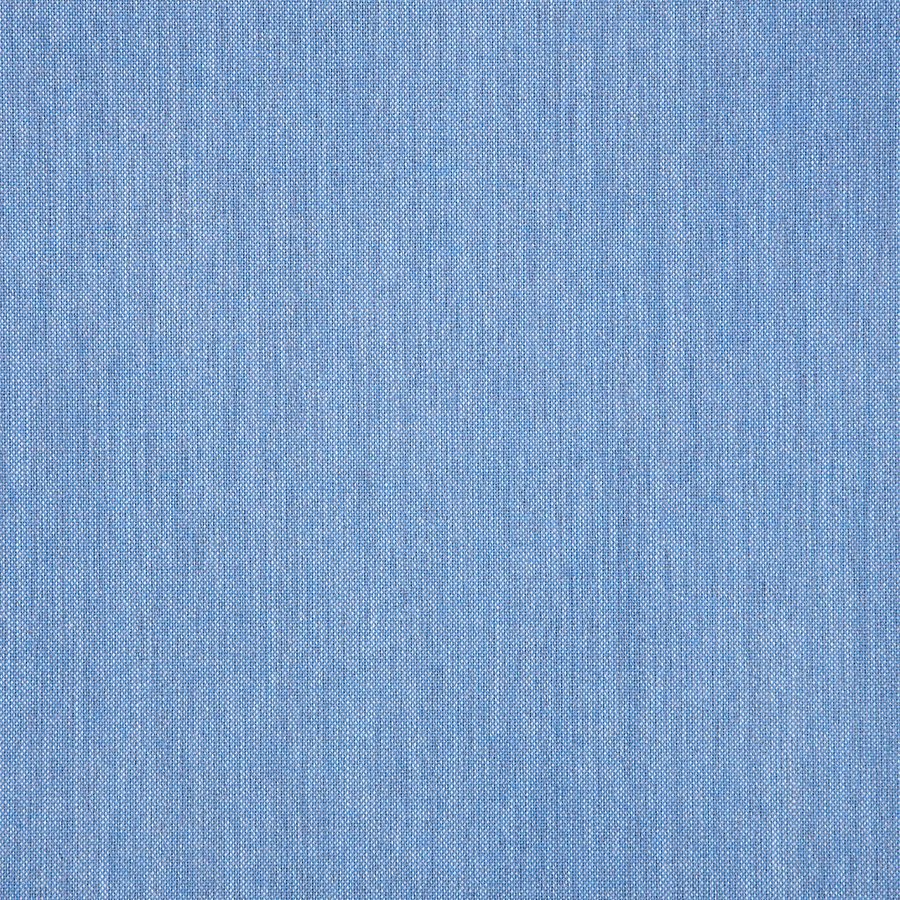
Cast Ocean, one of our Blue-Green Sunbrella fabrics.
Ask anyone who's replaced patio cushions more than once and they'll usually describe the same arc: bright and comfortable for a season, then a slow slide into faded, stiff, or faintly musty — not from one bad day, but from ordinary daily exposure adding up. The three biggest contributors are almost always sun, water, and whatever chemicals happen to be nearby, most commonly pool chlorine near a deck or splash pad.
Breaks down surface pigment on printed fabric. A dyed-on-top colour has nowhere to go but fade.
Salt is abrasive and holds moisture. Natural fibres absorb it readily, inviting mildew.
A bleaching agent. Most surface dyes discolour or strip under repeated splash exposure.
Different mechanisms, but the same underlying vulnerability every time: a fabric whose colour sits on top of the fibre, rather than inside it, only has one layer of defence. Once that layer is worn through — by UV, by salt crystallising in the weave, by chlorine — there's nothing left underneath but the undyed fibre.
Sunbrella fabric is woven from acrylic fibre that's coloured before it's even spun into thread — the pigment is mixed into the liquid acrylic itself, so it runs through the entire cross-section of the fibre, not just the outer surface. There's no separate dyed layer to wear through, because the colour is the fibre, all the way through.
This is also why Sunbrella's own care guidance allows a diluted bleach solution for stubborn stains and mildew — something that would strip colour from most surface-dyed fabric almost immediately. Acrylic fibre itself is also chemically resistant to chlorine at a structural level, which is part of why solution-dyed acrylic has been the standard choice for marine upholstery and pool-adjacent furniture for decades, not just patio cushions.
The same acrylic construction also resists moisture absorption, which matters directly for salt air and humidity — the fabric doesn't hold onto water long enough for salt to concentrate in the weave or for mildew to take hold, and it dries quickly between exposures rather than staying damp.
None of this means an outdoor cushion needs zero care — rinsing off salt residue and letting cushions dry fully still extends the life of any fabric, Sunbrella included. What it does mean is that the fabric itself isn't the limiting factor the way it is with standard outdoor fabric. A properly made Sunbrella cushion, cleaned occasionally, is built to handle years of the exact conditions — sun, splash, salt air — that wear out cheaper fabric within a season or two.
No — Sunbrella's solution-dyed acrylic fibre structurally resists chlorine. It's the same reason Sunbrella's own cleaning guidance allows a diluted bleach solution for tough stains: the pigment runs through the fibre, not just the surface, so chlorine exposure from pool splash or cleaning doesn't strip colour the way it does with surface-dyed fabric.
It can, with the wrong fabric — salt is abrasive and holds moisture, which encourages mildew, and natural fibres like cotton absorb it readily. Sunbrella's acrylic fibre doesn't absorb moisture the way natural fibres do, so it resists the salt-and-humidity combination that causes most coastal fabric failures.
It depends entirely on how the fabric is dyed. Standard printed or surface-dyed outdoor fabric typically visibly fades within a season or two of strong sun. Solution-dyed Sunbrella fabric is built specifically to resist UV fading and commonly holds its colour for years of daily outdoor exposure.