
Three numbers decide whether a cushion looks made-for-it or bought-near-enough: length, width and thickness. Here's how to take them properly, for chairs, loungers and built-in benches.
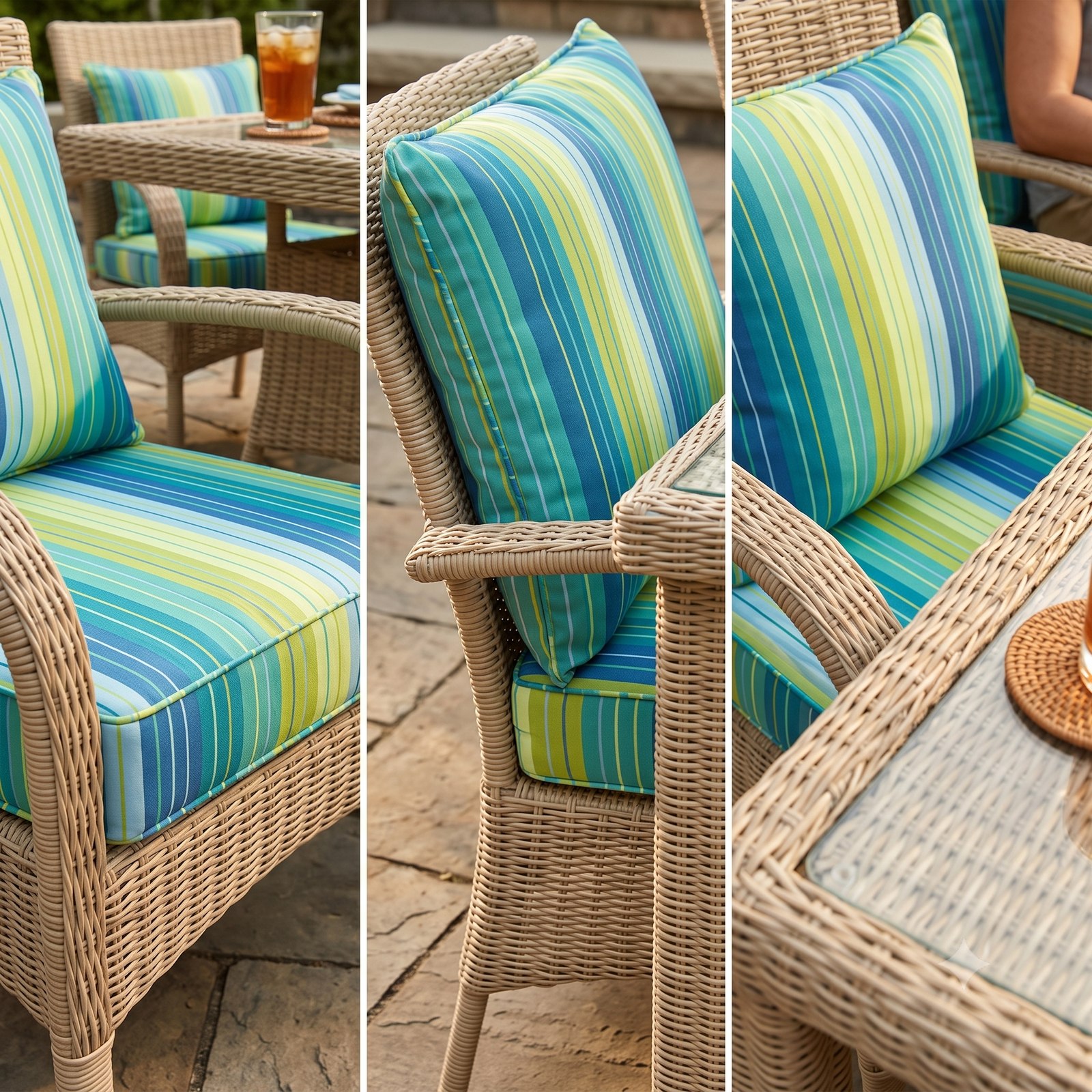
Seat and back cushions cut to each chair's own measurements — no nearest-size compromise.
Short answer: measure the seat or frame, not the old cushion cover. Take the length at the widest point, the width from front edge to back rest, and decide the thickness you want. Write all three down in centimetres, round to the nearest centimetre, and you have everything a made-to-measure cushion needs. The rest of this guide covers the details that trip people up: built-in benches, sagging old foam, back cushions, and when to order cover-only.
A metal tape measure (a soft sewing tape stretches and sags across long benches), a pencil, and somewhere to note three numbers per cushion. If you are replacing more than one cushion, label each one — "left lounger seat", "dining chair back" — because two cushions that look identical often differ by a centimetre or two, especially on older or handmade furniture.
Measure everything in centimetres. Cushiere's configurator takes length, width and thickness in centimetres, so measuring in the same unit avoids conversion mistakes.
Run the tape along the longest side of the seat, inside any arms or frame edges. On a bench, that is wall to wall or arm to arm. On a lounger, it is the full length of the bed. Measure in two or three places — at the front, middle and back — and use the smallest number if the frame is not perfectly square. A cushion that is a touch short sits neatly; one that is a touch long bows up in the middle and never looks right.
Measure from the front edge of the seat to the back rest (or to the wall, on a built-in bench). If you plan to add back cushions, they will take up some of that depth, so the seat cushion should still be measured to the full depth — the back cushion sits on top of it, not in front of it.
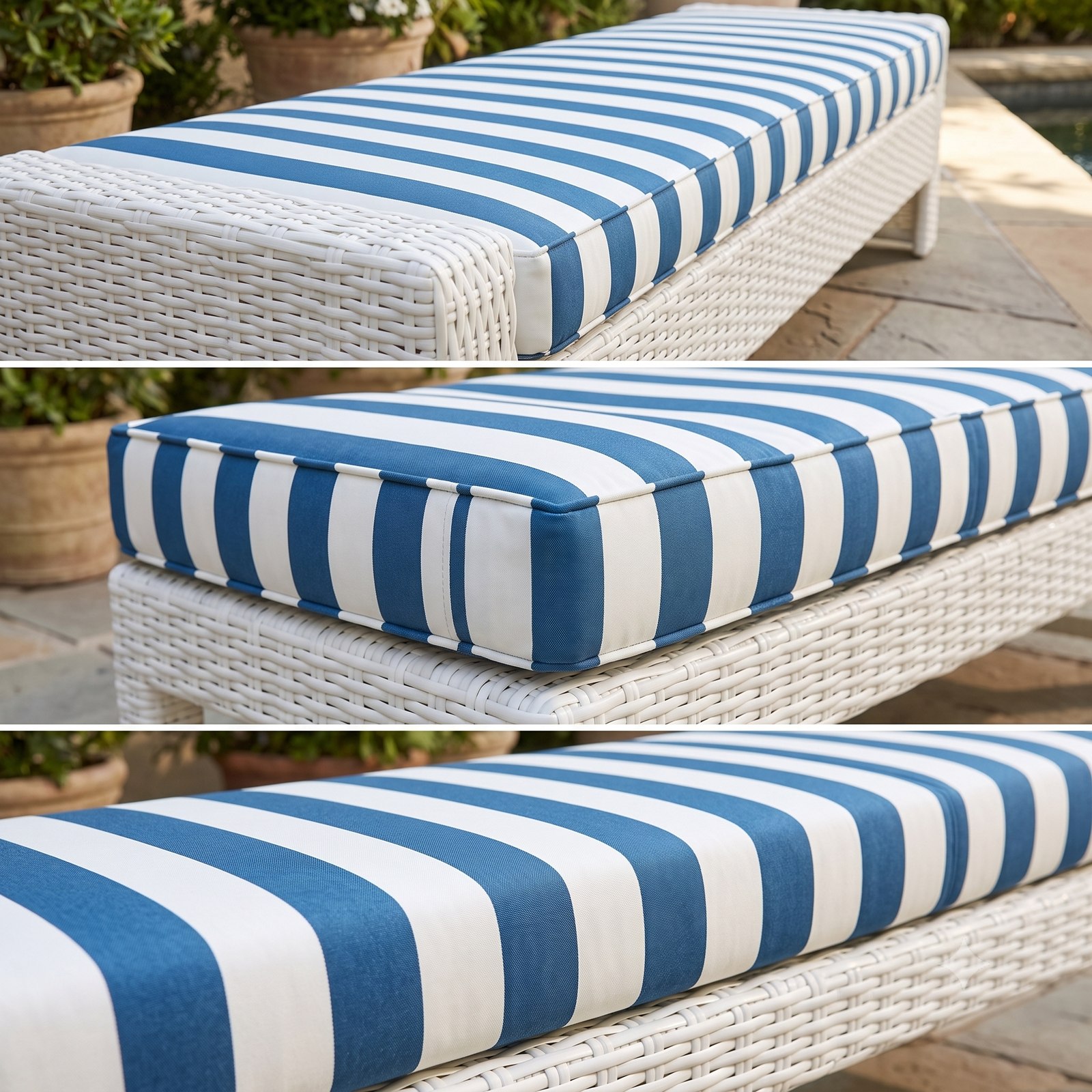
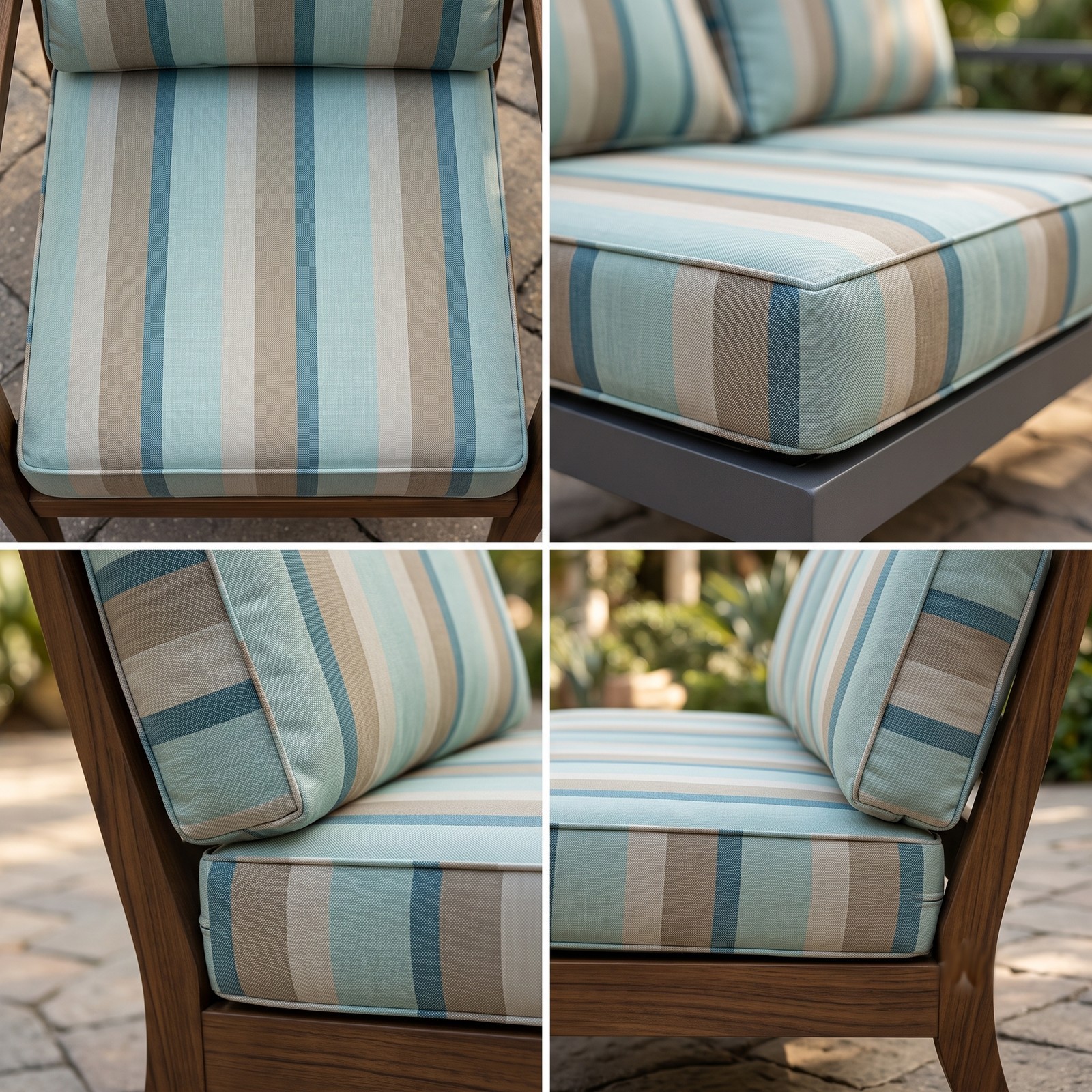
A long bench measured wall-to-wall (left) and a lounge chair measured inside its frame (right) — the same three numbers, length, width and thickness.
Thickness is the one measurement you choose rather than take. As a rough guide: thinner cushions suit dining chairs and benches where you sit upright; deeper cushions suit loungers, daybeds and window seats where you sink in. If the seat sits under a window or against a wall rail, check that the finished height still clears it.
On Cushiere, the first 3cm of thickness is included in the base price and every extra centimetre adds 5%, so the configurator shows exactly what a deeper cushion costs before you commit.
If your existing foam is still in good shape and you only want a new cover, choose cover only and measure the foam insert itself, lying flat. Old covers stretch and shrink over the years, so copying their size carries their faults into the new one. If the foam has gone flat or crumbly, replace it — an exact-fit high-density foam insert, cut to the same dimensions as the cover, is an option on every seat cushion.
Back and scatter cushions are more forgiving than seat cushions, because they rest against a frame rather than fitting inside one. Cushiere offers back cushions in six ready-made sizes, in any fabric from the library — usually the simpler choice. If your sofa frame has a fixed back space that standard sizes won't fill, measure it the same way as a seat: width across, height up, and the thickness you want.
Measuring the cushion top instead of the frame. Squashed foam and rounded edges make a cushion read smaller than the space it fills.
Ignoring arms and posts. Many outdoor chairs have posts at the corners. Measure the clear rectangle between them — Cushiere cushions are cut as rectangles, so the clear space is the size that fits.
Rounding up "for luck". Extra size doesn't give extra comfort; it gives a cushion that buckles. Round to the nearest centimetre, and round down if you're unsure.
Forgetting the edge finish. Piped edges look tailored and hold their shape; plain edges look softer and cleaner. Piping adds $8 per metre run, and it doesn't change the size you enter.
Shipping is priced on the cushion's footprint: the rate covers up to 1m × 1m, with a small charge for every extra 20cm in either direction. The largest single cushion that can ship is 2m × 4m — beyond that, get in touch for a freight quote. Long daybeds and built-in benches are often better split into two or three cushions anyway, which makes them easier to lift, clean and turn.
Should I measure the old cushion or the seat?
Measure the seat or frame. Old cushions compress and old covers stretch, so copying them repeats their fit problems. The exception is a cover-only order for foam you're keeping: then measure the foam insert lying flat.
Should I round my measurements up or down?
Round to the nearest centimetre, and round down if you're unsure. A slightly short cushion sits neatly; a slightly long one bows up in the middle.
What's the largest custom cushion Cushiere can ship?
Up to 2m × 4m for a single cushion. Anything larger needs a freight quote, and very long benches are often better split into two or three cushions.
Can I order just a new cover for my existing foam?
Yes. Choose cover only and enter the dimensions of your foam insert. If the foam has gone flat, add a high-density foam insert cut to the same size instead.